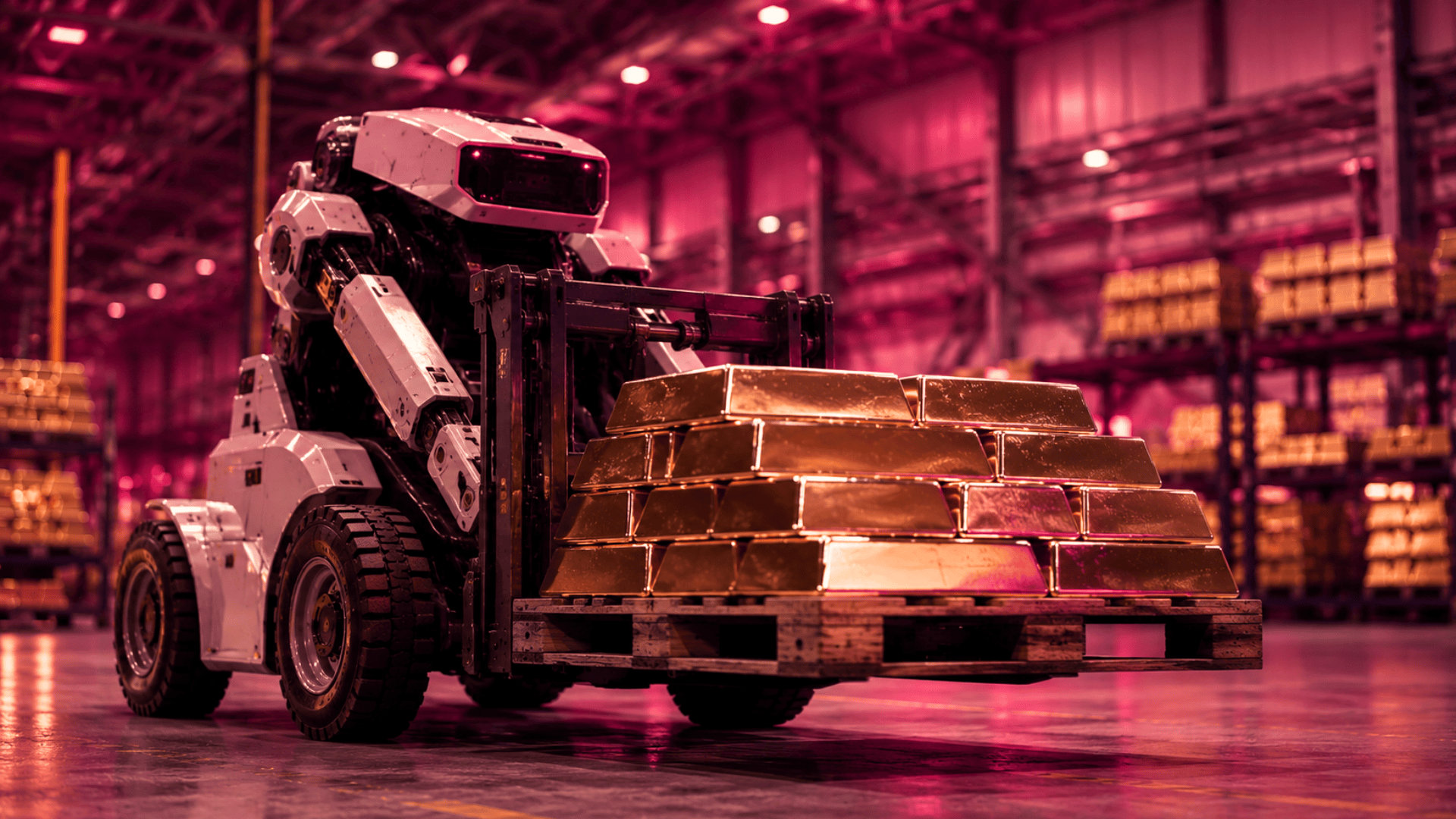


Something structurally different is happening in 2026. The world’s largest technology companies are not just building software. They are becoming energy companies, infrastructure developers, and long-term capital allocators on a scale that has no historical precedent in the technology sector.
The Numbers That Define the Moment
Five companies (Amazon, Alphabet, Meta, Microsoft, and Oracle) have committed to spending between $660 billion and $725 billion on capital expenditure in 2026, nearly doubling 2025 levels. Approximately 75% of that figure, around $450 to $500 billion, is directed specifically at AI infrastructure: data centers, GPUs, specialized chips, networking equipment, and the power systems to run them.
To put this in context: according to Moody’s Ratings, this spending level is nearly six times the investment made in 2022, the year generative AI first entered mainstream consciousness. McKinsey projects total global data center capital expenditure will reach $6.7 trillion by 2030, with approximately 70% attributable to AI workloads.
Individual commitments illustrate the scale. Amazon has guided to $200 billion in capital expenditure for 2026, up 60% year on year. Microsoft is tracking toward $120 billion or more. Alphabet has guided to between $75 billion and $85 billion. Amazon’s AWS segment now spends 57% of revenue on capital expenditure. These ratios were previously unthinkable for established technology businesses.
This is no longer a software story. It is an infrastructure story.
The Binding Constraint Is Not Capital. It Is Power
The most consequential development of 2026 is not the volume of capital being deployed. It is the discovery that the primary bottleneck on AI expansion is electricity, not money or technology.
Gartner estimates global data center electricity demand will exceed 1,000 TWh by 2026, double the 2023 baseline. Brookings Institution notes that if data centers were a country, they would rank as the fifth largest energy consumer in the world, between Japan and Russia. By 2030, data centers could consume between 9% and 17% of US electricity.
The problem is structural: AI demand moves at the speed of capital markets, while grid infrastructure moves at the speed of permitting, procurement, and construction. Goldman Sachs documents that US data centers already face a capacity shortfall of more than 11 gigawatts today, with Morgan Stanley projecting the cumulative gap to exceed 49 gigawatts by 2028. Gartner predicts that power shortages will restrict 40% of AI data centers by 2027.
The IEA reported in April 2026 that data center developers are advancing a large number of projects with on-site natural gas-based power generation, largely in the United States, constrained by slow grid connections. Data center demand moves at the speed of capital markets, while grid infrastructure moves at the speed of permitting, procurement, and construction.
Big Tech Becomes the Energy Industry
The response has been unambiguous: the largest technology companies are moving into direct ownership and development of power generation assets.
Microsoft has signed a 20-year power purchase agreement with Constellation Energy to restart the dormant Three Mile Island nuclear plant, renamed the Crane Clean Energy Center. The facility will provide 835 megawatts of carbon-free electricity, dedicated entirely to Microsoft’s AI data centers. This is the first time a retired nuclear reactor in the United States has been brought back to life for a single commercial customer.
Amazon secured a 1.92-gigawatt power purchase agreement from the Susquehanna nuclear plant and invested $500 million in small modular reactor development. Google signed a deal to deploy a fleet of SMRs through Kairos Power, targeting operational units by 2030. Meta announced a 6.6-gigawatt nuclear commitment in early 2026. Microsoft separately announced participation in a $30 billion BlackRock effort to invest in AI infrastructure, covering both data centers and power generation.
This is not energy policy. This is capital strategy. Companies with secured power (through owned generation, long-term purchase agreements, or strategic utility relationships) now hold a structural competitive advantage over those competing for constrained grid capacity. Energy access has become as important as chip access in determining who can deploy AI at scale.
Sovereign AI and the Geopolitics of Compute
The infrastructure buildout is not confined to the private sector or to the United States. National governments are treating AI infrastructure as a matter of strategic sovereignty.
The concept of Sovereign AI refers to national investments in AI compute infrastructure to ensure independence from foreign technology providers. It has moved from think-tank language into budget allocations and procurement contracts. Dell’Oro Group projects worldwide data center infrastructure capital expenditure will grow from $679 billion in 2025 to $1.7 trillion by 2030, a 21% compound annual growth rate. A significant portion of that growth is driven by non-US state and sovereign investment.
The competitive dynamic with China adds urgency. Chinese hyperscalers (Alibaba, ByteDance, and Tencent) are executing parallel infrastructure buildouts. The question of which nations and companies control the physical substrate of AI, including chips, data centers, and power, has become a geopolitical question as much as a commercial one.
What This Capital Cycle Rewires
Several structural shifts are underway simultaneously, and they extend well beyond the technology sector.
Energy markets are being repriced. Nuclear power, which was in managed decline across most of the Western world, has become a strategic asset. The restart of Three Mile Island is not a one-off. It signals that stable baseload power generation is now scarce relative to demand, and that scarcity will attract capital. Companies with generation assets, transmission rights, and grid interconnection agreements are operating in a different risk environment than they were three years ago.
The supply chain is under sustained pressure. Surging transformer demand has created a significant supply deficit, with domestic manufacturing capacity unable to keep pace. Lead times for high-voltage electrical equipment, cooling infrastructure, and networking hardware are extending. This creates cost inflation and project delays that flow through the entire AI stack, from chip manufacturers to cloud providers to end users.
Private capital is flowing into infrastructure, not just software. Goldman Sachs projects total hyperscaler capex from 2025 through 2027 will reach $1.15 trillion, more than double the $477 billion spent in the preceding three years. This is drawing institutional capital (private equity, private credit, infrastructure funds, sovereign wealth funds) into adjacent sectors: utilities, real estate, cooling technology, fiber, and industrial manufacturing. The boundary between technology investment and infrastructure investment is dissolving.
Geography matters again. Data centers are moving to where power is available and cheap, not where talent or customers are concentrated. This is reshaping regional development patterns in ways that were not predictable even two years ago.
The Question That Remains Open
The fundamental tension in this capital cycle is whether the revenue will justify the investment. Pure-play AI vendors led by OpenAI and Anthropic are posting rapid revenue growth, but their combined revenues remain a fraction of the infrastructure investment being deployed on their behalf.
Hyperscaler executives have expressed confidence that these bets will pay off. Markets have been more skeptical. Shares of Google, Amazon, and Microsoft all sold off following their earnings calls in early 2026, even as they disclosed record capital commitments. Investors remain cautious about the huge spending for AI infrastructure.
The historical comparison that analysts reach for most often is the 1990s fiber optic overbuild: a period of genuine transformative infrastructure investment that nonetheless produced a significant valuation correction before the underlying demand materialized. The analogy is contested, but the question it raises is legitimate.
What is not in question is the structural nature of the shift. AI infrastructure is no longer a growth vertical within the technology sector. It is a horizontal layer of the global economy, as foundational as electrical grids, logistics networks, and financial systems, and it is being built at a pace that those systems were not designed to accommodate.
Why This Is Relevant to Cross-Border Infrastructure
For businesses operating across jurisdictions (in payments, fintech, data management, or digital operations) the AI infrastructure cycle creates real operational context.
The cost of compute, the availability of cloud capacity, the latency of AI-powered services, and the compliance requirements attached to data processing are all being reshaped by decisions made in 2025 and 2026 about where data centers get built, who owns the power that runs them, and which regulatory frameworks govern their operation.
RUTA tracks structural shifts in global technology and capital markets. If you want to stay informed on developments that matter for cross-border business, follow our updates.