

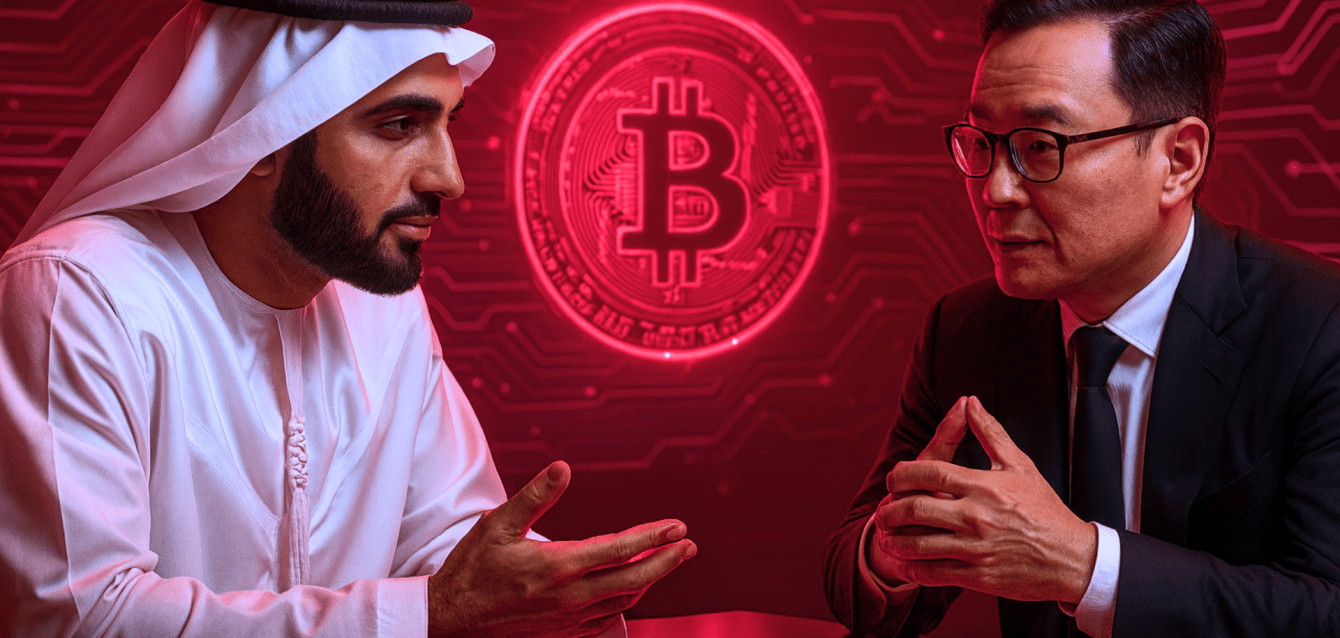
The competition is heating up between Dubai and Hong Kong to become the world’s leading crypto and fintech capital. Both cities are launching bold initiatives to attract blockchain startups, digital asset firms, and fintech innovators. Dubai is using its oil wealth, Islamic finance, and business-friendly policies to make its case, while Hong Kong relies on its strong financial markets and support from China to maintain its advantage. This rivalry between the two fintech hubs highlights how regions can develop Web3 ecosystems and the challenges they encounter.
Dubai’s Grand Strategy: Oil Wealth, Web3, and Islamic Finance
Dubai is open about its ambition to take the lead from Asia’s crypto leaders. Its approach involves several strategies:
- State investment in Web3: Dubai is investing its significant oil wealth into developing crypto and Web3 infrastructure. Government-backed funds and free zones are providing capital and incentives to accelerate blockchain startups and pilot programs.
- Islamic finance niche: As a primarily Muslim region, Dubai is creating a unique space in Sharia-compliant digital finance. It actively promotes a halal crypto economy that aligns with Islamic banking principles. This identity-based strategy could attract the global Islamic market, which includes nearly a quarter of the world’s population, under Dubai’s influence.
- Regulatory and tax advantages: Dubai offers zero personal income tax and minimal corporate tax, making it appealing to entrepreneurs. It also has no property transfer tax, allowing the city to lead real estate tokenization – unlike Saudi Arabia, which charges a 5% property transfer tax. With no tax burdens, Dubai’s regulators have facilitated secondary trading of tokenized real estate, transforming an illiquid asset class into a digital market.
These advantages have enabled Dubai to develop a thriving crypto ecosystem. Hundreds of blockchain and fintech companies have moved to Dubai. At the Dubai Multi Commodities Centre (DMCC) free zone, the Crypto Centre surpassed 700 member companies by mid-2025, marking a 38% year-on-year increase and making it the largest cluster of crypto and Web3 firms in the area. The Dubai International Financial Centre (DIFC) is also seeing growth, with about 900 fintech and innovation companies operating there as of 2023. Initiatives like the Dubai Metaverse Strategy, which aims to create 40,000 virtual jobs by 2030, further demonstrate the government’s commitment to future technology.
However, Dubai faces challenges. The UAE’s regulatory system is split across various authorities. Dubai’s new Virtual Assets Regulatory Authority (VARA) oversees crypto activities in the mainland and most free zones, but places like DIFC and Abu Dhabi’s ADGM have their own governing bodies. This fragmentation can create complications, unlike Hong Kong’s more streamlined system. Additionally, operating costs in Dubai remain high despite tax advantages, as companies must hire local Emirati staff and pay significant regulatory fees, which can offset the no-tax benefit. Dubai’s innovation also encounters global compliance issues; for instance, a foreign investor holding a Dubai real estate token might have to report both the token and the underlying asset in their home country. These factors temper Dubai’s otherwise strong push.
Hong Kong’s Edge: Global Finance Hub with China’s Support
Hong Kong, a longstanding giant in global finance, has re-emerged with renewed efforts in crypto and Web3 since 2022. After a cautious period following Mainland China’s crypto ban, Hong Kong’s government shifted its approach with pro-crypto policies to regain its status as Asia’s digital asset hub. The results are clear in both regulatory progress and growth in the ecosystem.
On the regulatory side, Hong Kong established a licensing system for virtual asset trading platforms (crypto exchanges) in 2023. By early 2025, ten exchanges had received licenses to operate under the oversight of the Securities and Futures Commission, including both local and international companies. Hong Kong is also leading the way on stablecoins, passing a law in May 2025 to regulate fiat-backed stablecoin issuers, which will take effect in August. More licensing frameworks for crypto custody and derivatives trading are being introduced to ensure clear rules for new products. Officials emphasize that these actions reflect their commitment to building a vibrant digital asset ecosystem while protecting investors.
Beyond crypto rules, Hong Kong benefits from a strong advantage in fintech. The city is home to over 1,100 fintech companies (including Web3 startups) as of 2025, supported by a strong network of digital banks, virtual insurers, accelerators, and research centers. Government-backed incubators like Cyberport host more than 400 Web3 and fintech startups. This concentration of talent and firms enhances Hong Kong’s traditional strength in capital markets, where it remains the world’s third-largest financial center, behind only New York and London, and the top choice in Asia-Pacific, well ahead of regional competitors like Singapore and Dubai. The Global Financial Centres Index noted Hong Kong’s strong performance in fintech innovation, infrastructure, and business environment. The city offers substantial liquidity and institutional capital, advantages that Beijing is eager to maximize.
Hong Kong also has support from Mainland China that no other hub can match. Beijing has utilized Hong Kong as a testbed and conduit for digital asset initiatives aligning with its geopolitical ambitions. Observers believe Hong Kong’s crypto-friendly regulations might be a preview of China’s own evolving stance, using the city to experiment under the “one country, two systems” policy. Mainland banks and funds, including some linked to the state, have quietly bolstered Hong Kong’s crypto market, ensuring abundant liquidity. A visit in 2025 by a member of the Trump family, who lauded Hong Kong as a “hell of a power” in crypto, illustrates how significant Hong Kong has become in influencing prices and trends throughout Asia.
Yet, Hong Kong remains proactive. Officials are advancing initiatives to strengthen the city’s fintech leadership, including exploring a pilot for a retail central bank digital currency (e-HKD) and streamlining fintech visas for talent. They are also attentive to compliance; Hong Kong’s adoption of global anti-money laundering (AML) and Know-Your-Customer (KYC) standards is strict, adhering to FATF guidelines to maintain its reputation as a reliable financial hub. This focus on strong regulation and continuous oversight aims to reassure institutions that Hong Kong can balance innovation with security.
A New Phase of Fintech Rivalry: Outlook and Challenges
The competition between Dubai and Hong Kong showcases two different strategies for becoming leaders in fintech and crypto. Dubai has top-down support from the state, along with new laws and incentives to build a crypto industry nearly from the ground up. Its rapid experimentation, like real estate tokenization and embracing the metaverse, indicates a readiness to innovate – but it must turn these early initiatives into enduring relevance across borders. In contrast, Hong Kong capitalizes on its long-established financial system and ties with the world’s second-largest economy. Its strategy emphasizes regulatory clarity, market liquidity, and gradual innovation within a strong legal framework.
Currently, Hong Kong has the upper hand in Asia’s crypto and fintech landscape, largely due to its institutional strength and backing from China. However, Dubai is quickly narrowing the gap. The Emirate’s advantages, such as no income taxes, impressive infrastructure, and a vibrant startup scene, continue to attract talent and investment, including from Asia. Dubai’s challenge is to grow its successes beyond niche markets, like Islamic finance, to reach the level of liquidity and trust that Hong Kong enjoys. This likely means seeking greater involvement from global financial institutions and potentially forming partnerships with markets like Singapore or even Hong Kong, rather than simply competing.
One thing is clear: both cities will shape the future of fintech and Web3 in their regions. Their rivalry is pushing each to improve by updating laws, investing in education, and enhancing oversight. For entrepreneurs and investors, this competition is largely beneficial, creating multiple centers of excellence to choose from. As these financial centers compete to attract the next big crypto exchange or fintech unicorn, they highlight a larger trend: regulatory clarity and policies that welcome innovation are becoming essential in the global financial landscape.
As this rapidly changing landscape evolves, one constant is the need for strong compliance and risk management. Being crypto-friendly does not mean unregulated, and authorities in Dubai, Hong Kong, and beyond are enforcing strict anti-money laundering (AML) and Know Your Customer (KYC) regulations to combat illicit finance. Financial institutions and fintech companies expanding in these hubs need to establish robust compliance frameworks from the outset.
At Ruta, we create secure, scalable fintech platforms with integrated AML and KYC automation features, including real-time screening and continuous KYC. Our solutions empower financial institutions to meet international standards, improve efficiency, and stay ahead of emerging threats. Let’s collaborate to strengthen your compliance framework and prepare your business for the future. Contact us today to begin the conversation.